
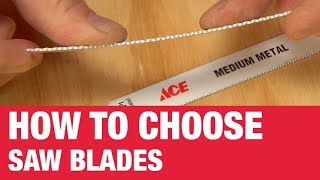
How To Choose Saw Blades
Its important to pick the right blades for your power saws. This will shorten your work by making faster cuts and prevent the saw from binding or breaking. The label should help you decide which blade is right for the project, but here are some extra tips to help you out.
Precision
- The more teeth on a blade the more precise and find the cut is
- Fewer or larger teeth mean the cut will be rougher
- Deeper gullets behind the cutting tip help remove more excess material as you are cutting
Reciprocating Saws
- Length, width and thickness of reciprocating saw blades will determine what you are using it for
- For cutting through wider material, use a longer blade
- Jobs like demolition need wider thicker blades
- Carbon steel blades are more flexible and inexpensive but will dull quickly
- High speed steel are more durable but will be less flexible and could break if bent
- Bi-metal combines heat resistant durability and flexibility
- Carbide grit is made for fiber glass, ceramic and cement board
Circular Saws
- Steel circular saw blades are inexpensive but can dull more quickly than high speed steel
- Carbide tip blades cost a little more but last longer
- Cost difference matters. Think of the kind of use you will put your tool through. Higher quality blades stay sharper longer, so if you use the tool a lot, you may want to consider a higher quality blade
- You will want about 48 teeth per inch for smooth cuts
- Blades with fewer teeth per inch is good for ripping, which means cutting with the grain of the wood
Specialty Blades
- If you’re cutting fiber or cement siding you will need a specific blade
- Abrasive blades but masonry, tile or steel
- Diamond blades grind rather than cut. They are made for hard dense materials like glass, concrete and ceramic