
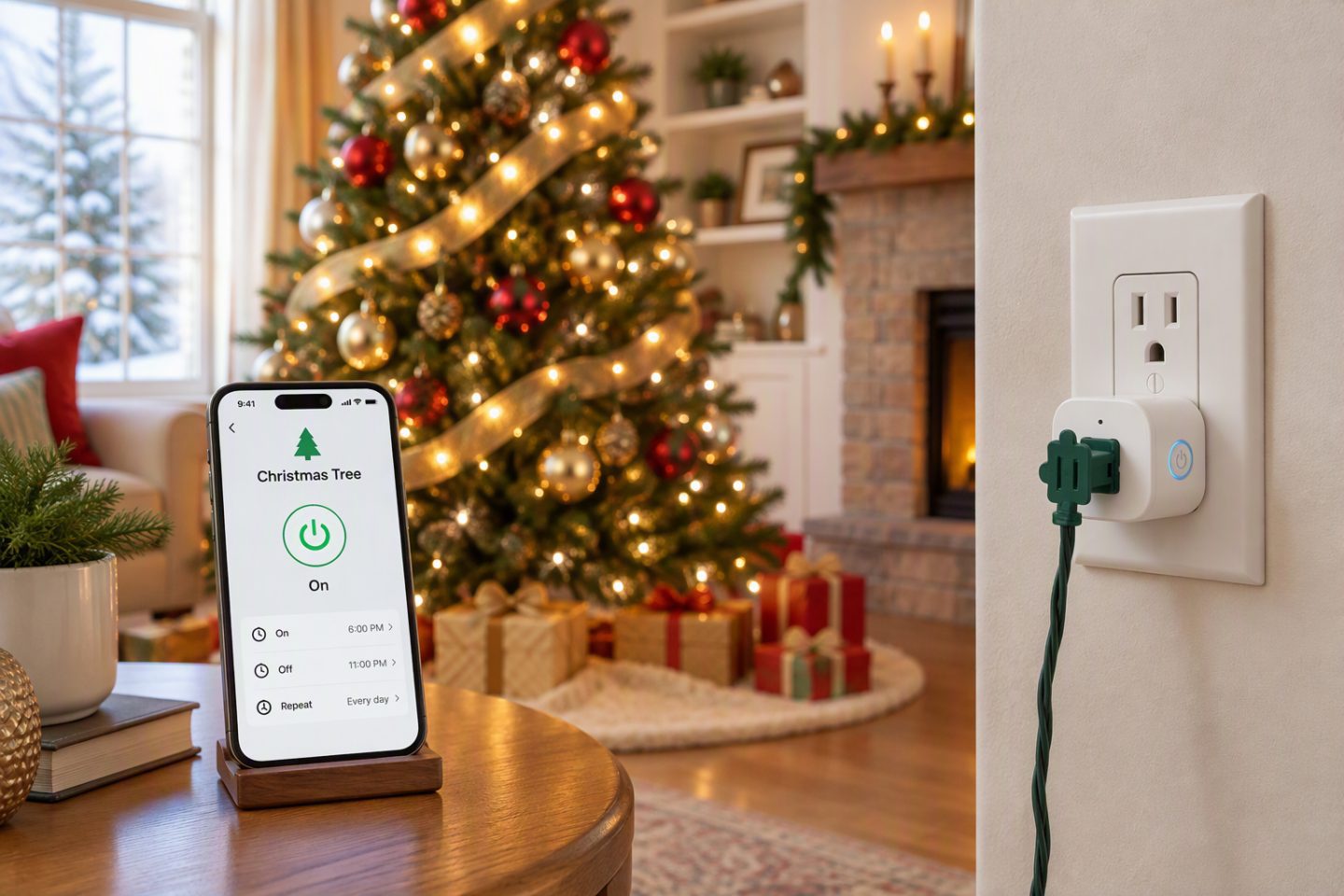
IN THIS ARTICLE
If you’ve ever forgotten to turn your Christmas lights on before guests arrive or realized they’re still glowing long after bedtime, a Christmas light timer may be one of the simplest holiday upgrades you can make. These small devices automatically turn your lights on and off according to a schedule, helping make decorating easier while reducing the hassle of managing your display every day.
Whether you’re decorating a Christmas tree indoors or creating a full outdoor display, here’s what you should know before buying a holiday light timer.
Quick Recommendation: Which Timer Should You Buy?
| If You Want To… | Consider |
| Automate a Christmas tree | Indoor timer |
| Control outdoor lights | Outdoor-rated timer |
| Set custom schedules | Digital timer |
| Keep things simple | Mechanical timer |
| Manage multiple display areas | Multi-outlet timer |
What Is a Christmas Light Timer?
A Christmas light timer is a device that controls when your lights receive power.
Instead of plugging lights in every evening and unplugging them each night, the timer follows a preset schedule and does the work automatically.
Common uses include:
- Christmas tree lights
- Outdoor roofline displays
- Porch decorations
- Lighted wreaths
- Walkway lighting
- Shrub and landscape lighting
Benefits of Using a Holiday Light Timer
Convenience
Timers eliminate one of the most repetitive parts of holiday decorating.
Once programmed, your lights can operate automatically throughout the season.
Example
Set your lights to turn on at dusk and shut off before bedtime so they’re only operating when you want them visible.
Reduced Energy Waste
Running holiday lights only when needed can help avoid unnecessary energy use.
Instead of leaving lights on overnight or all day by accident, timers keep your display operating on a predictable schedule.
Consistent Displays
A timer helps ensure your display turns on at the same time every evening.
This creates a polished appearance and prevents missed evenings when you forget to switch everything on.
Indoor vs. Outdoor Light Timers
One of the most important buying decisions is choosing the correct timer type.
Indoor Light Timers
Best For
- Christmas trees
- Indoor wreaths
- Mantels
- Decorative villages
- Window displays
Benefits
- Compact size
- Easy setup
- Ideal for indoor outlets
Limitations
Indoor timers should only be used in dry indoor locations.
Outdoor Light Timers
Best For
- Roofline lights
- Yard displays
- Porch decorations
- Landscape lighting
- Walkway lights
Benefits
- Designed for outdoor conditions
- Weather-resistant construction
- Suitable for outdoor outlets
Limitations
Usually larger than indoor models and may require additional setup space.
Types of Christmas Light Timers
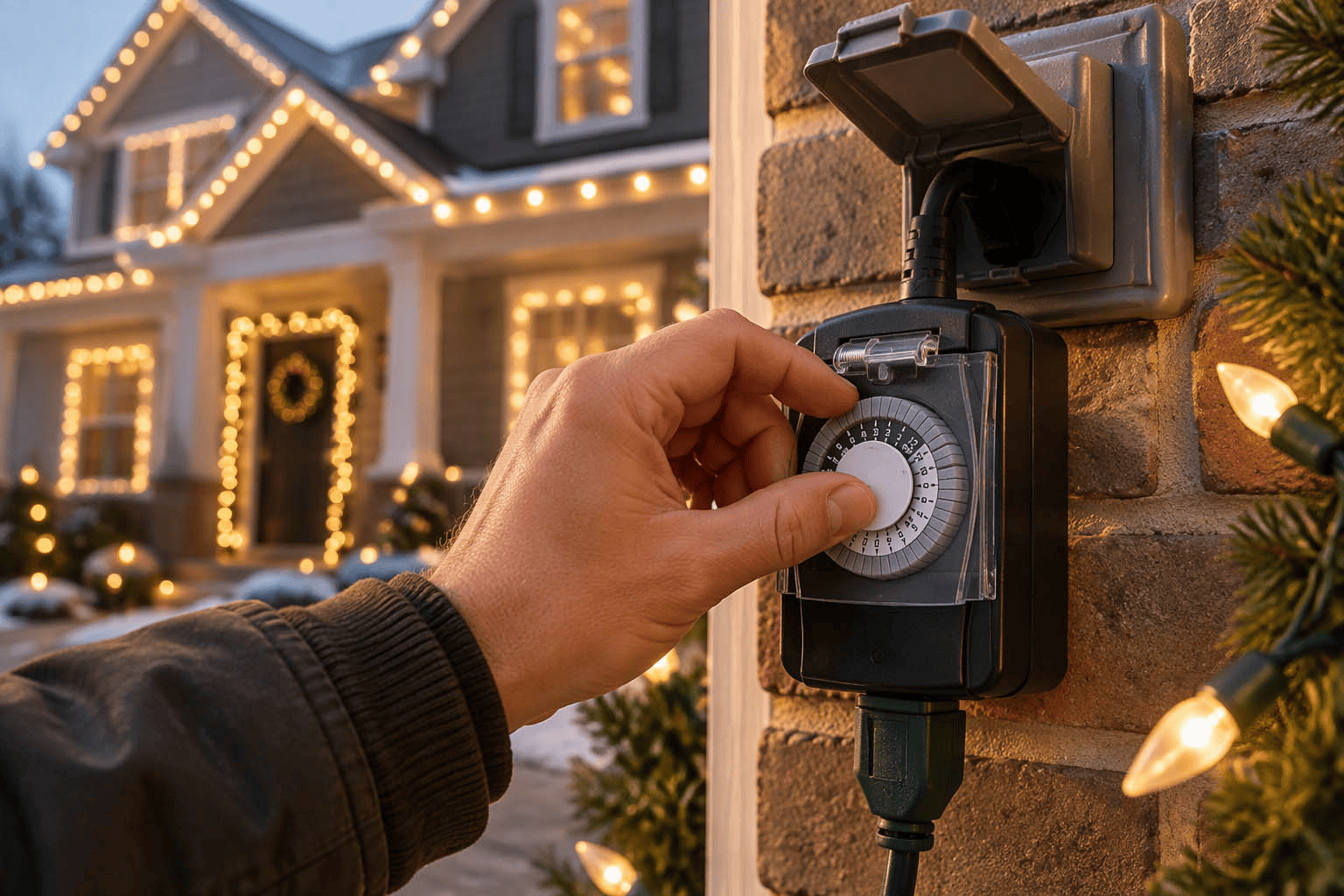
1 Mechanical Timers
Mechanical timers use a rotating dial and simple controls.
Best For
- Basic schedules
- First-time timer users
- Simple lighting displays
Pros
✅ Easy to use
✅ Reliable operation
✅ Budget-friendly
Cons
❌ Fewer scheduling options
2 Digital Timers
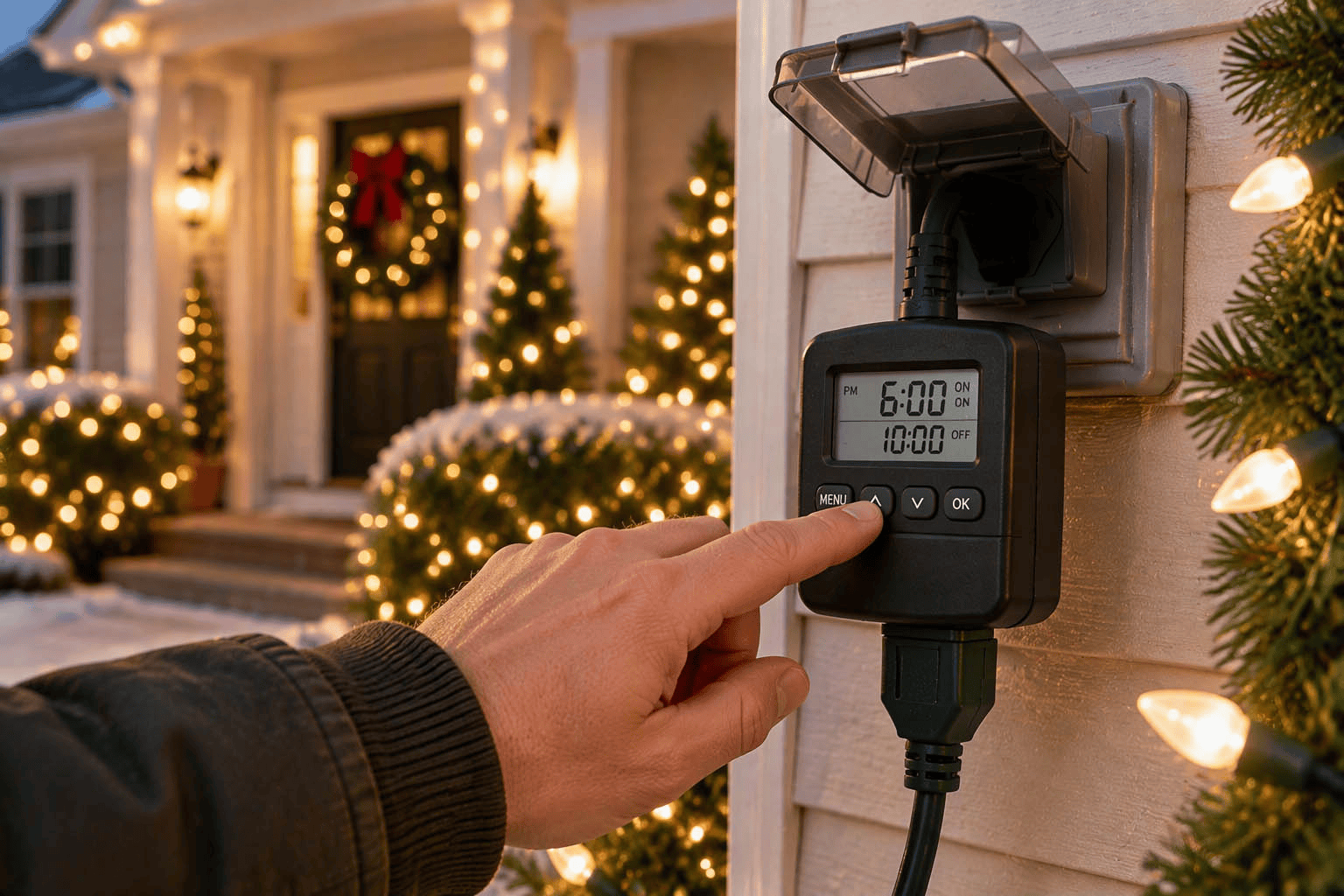
Best For
- Larger displays
- Multiple operating periods
- Customized schedules
Pros
✅ More programming flexibility
✅ Precise scheduling
✅ Easy schedule adjustments
Cons
❌ More setup required
3 Smart Timers
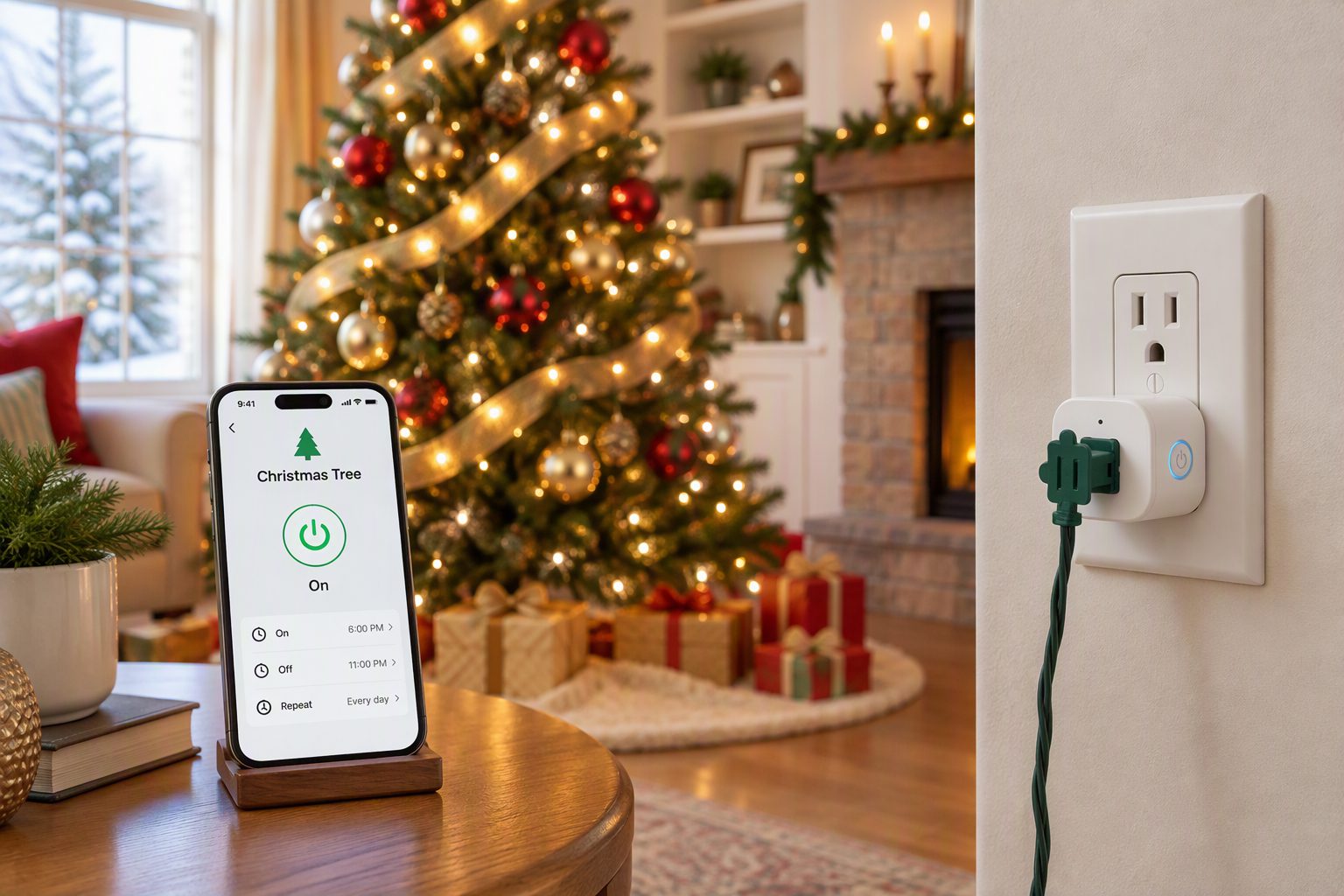
Some timers integrate with smart-home systems and mobile apps.
Best For
- Connected homes
- Advanced scheduling
- Remote control convenience
Pros
✅ Control from a smartphone
✅ Flexible scheduling
✅ Easy adjustments
Cons
❌ Typically higher cost
Christmas Light Timer Comparison Chart
| Feature | Mechanical | Digital | Smart |
| Ease of Use | Excellent | Very Good | Good |
| Scheduling Flexibility | Basic | Advanced | Advanced |
| Remote Access | No | No | Yes |
| Best For | Simple displays | Customized schedules | Smart homes |
How to Choose the Right Timer
When comparing options, consider:
- Location
Will the timer be used indoors or outdoors?
- Number of Decorations
Larger displays may benefit from multi-outlet timers.
- Schedule Complexity
Simple schedule? Choose a mechanical timer.
Multiple schedules? Consider a digital or smart model.
- Outlet Accessibility
Timers can be especially useful when outlets are difficult to reach or hidden behind decorations.
- Weather Exposure
Outdoor displays require outdoor-rated timer products.
Holiday Light Timer Safety Tips
Do
✅ Use outdoor-rated timers outdoors
✅ Follow manufacturer load ratings
✅ Inspect cords and plugs before use
✅ Keep electrical connections protected from moisture
✅ Read setup instructions before installation
Don’t
❌ Exceed the timer’s electrical rating
❌ Plug excessive light strings into a single device
❌ Use indoor timers outdoors
❌ Operate damaged equipment
Helpful Tip
When planning a large display, check the timer’s maximum electrical capacity before connecting multiple decorations.
Common Mistakes to Avoid
Avoid these frequent decorating errors:
❌ Choosing an indoor timer for outdoor decorations
❌ Ignoring wattage limits
❌ Placing timers where they’re difficult to access
❌ Waiting until installation day to determine scheduling needs
❌ Forgetting to test the timer before final decorating setup
A quick test before installation can prevent troubleshooting headaches later in the season.
FAQ
Do Christmas light timers save energy?
Timers can help reduce wasted energy by ensuring lights operate only during scheduled times.
Can I use an indoor timer outside?
No. Outdoor displays should use timers designed and rated for outdoor use.
What type of timer is easiest to use?
Mechanical timers are generally the simplest option because they rely on straightforward dial controls.
Do I need a timer for a Christmas tree?
Not necessarily, but many homeowners use timers to automate tree lighting and eliminate daily plugging and unplugging.
What’s the difference between a timer and a smart plug?
A timer follows scheduled operations, while some smart plugs may offer additional remote-control features. Specific capabilities vary by product.